
About us
Brazil at a Glance
Publications

Anbima calls for regional coordination to widen SME capital access
Published March 2, 2026
To share
At Global Banking & Markets Latin America 2026, the Association said regulatory reform is advancing, but execution and coordination are now key to expanding local capital access
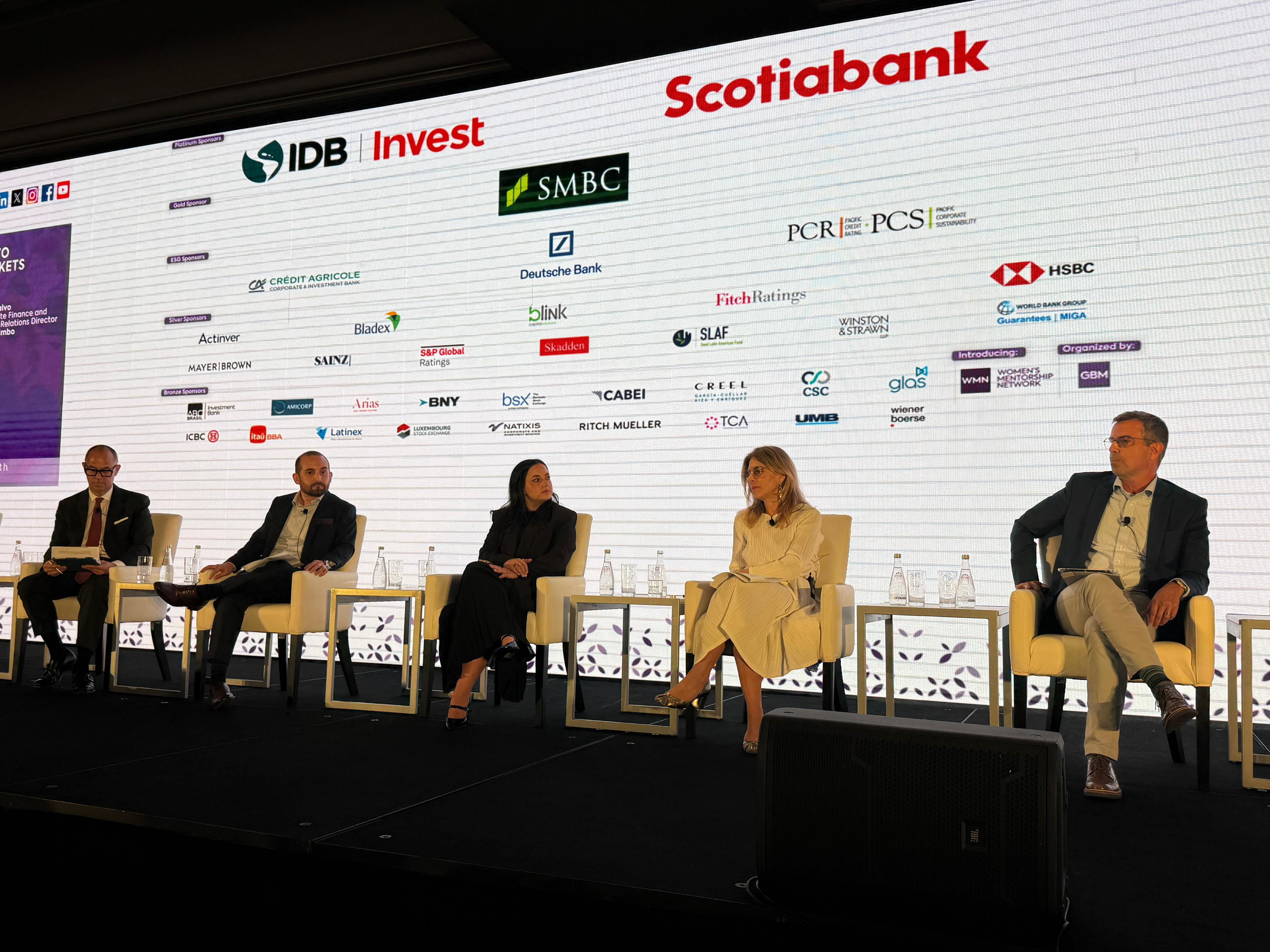
Global Banking & Markets Latin America 2026
Regulatory reforms in Brazil and Mexico are reshaping the rules of the game for capital formation in Latin America and the Caribbean, but panelists at Global Banking & Markets Latin America 2026 said the next phase is about execution: making issuance faster and cheaper, broadening investor participation and creating enough scale for smaller companies to tap markets sustainably.
The debate took place Feb. 26 on the panel “From reforms to results: Uneven paths to local capital access in LAC’s evolving markets,” with Carlos André, chairman of Anbima (Brazilian Financial and Capital Markets Association); Natalia Dias, managing director of capital markets at IDB Invest; Sofía Calvo, corporate finance and banking relations director at Grupo Bimbo; and Luis Gonzalí, vice president and co-chief investment officer at Franklin Templeton Mexico.
Brazil and Mexico: reform momentum, different starting points
Anbima’s chairman said Brazil has gone through a multi-year modernization effort spanning investment funds, public offerings, and distribution transparency.
André noted that the reforms calibrated disclosure and procedural requirements to the size of each offering and its target audience, shortened time to market, introduced tougher transparency rules on remuneration and conflicts of interest in distribution, and modernized the investment fund industry, bringing it much closer to international standards.
“Together, these changes better position Brazil for future market growth, though improved macro conditions remain critical,” he said.
Mexico, meanwhile, is pursuing a simplified access track for mid-sized companies through revisions to its securities market law. Franklin Templeton’s Gonzalí said the goal is to bring more companies into the market by cutting cost and time barriers. “The idea is to make it simple for those companies,” he said, citing fee reductions and faster approval timelines.
He added that the new framework shifts part of the approval process away from the regulator. “You don’t need the regulator, you need only the approval of the stock exchange,” he said.
But he cautioned that implementation is the hard part. “In the spirit it’s a very beautiful law. However, there’s a lot of legislative work to do,” Gonzalí said, arguing that many smaller companies still lack governance and credit quality to meet investor expectations, while ticket sizes can be too small for large institutions.
IDB Invest: turning policy into investable flows
Dias framed IDB Invest’s role as translating better rules into real issuance and liquidity by connecting global pools of capital to local opportunities. “We actually translate these improvements into real investment opportunities for the market by bringing new investors to the market,” she said.
She highlighted Brazil’s Eco Invest as a case study of how a program can be structured to pull in international demand. The initiative, she said, has already mobilized substantial capital: Eco Invest “has raised more than $28 billion in investments,” Dias noted.
To tackle foreign-investor constraints — particularly mandates that limit currency or risk exposure — she pointed to efforts to repackage local assets into formats that meet global requirements.
“How can we actually repack local assets and then place these assets with large institutional investors?” she said, describing the approach behind IDB Invest’s Request Plus initiative, including risk-mitigation tools such as FX hedging.
Issuers’ view: liquidity is built through repetition and standardization
From the corporate issuer side, Calvo argued that market depth is built less by one-off reforms and more by repeated issuance, predictable processes and standardized documentation — especially during volatility. “Liquidity doesn’t come by just issuing once. We have to make sure that this becomes a consistent thing,” she said.
She added that frequent issuers can help “create this consistency” in the curve and pricing, and that better market plumbing matters as much as rule changes. “Cost efficiency is as important as regulation,” Calvo said, emphasizing coordination across regulators, banks, investors and other market participants to improve predictability and lower issuance costs.
The goal, she said, is to keep windows short and execution ready when markets open.
A shared takeaway: process efficiency and alignment
Despite different country realities, the panel converged on a common diagnosis: regulatory alignment and process efficiency are essential to unlock liquidity and attract global investors — particularly for SMEs, where scale, disclosure capacity and governance can be limiting factors.
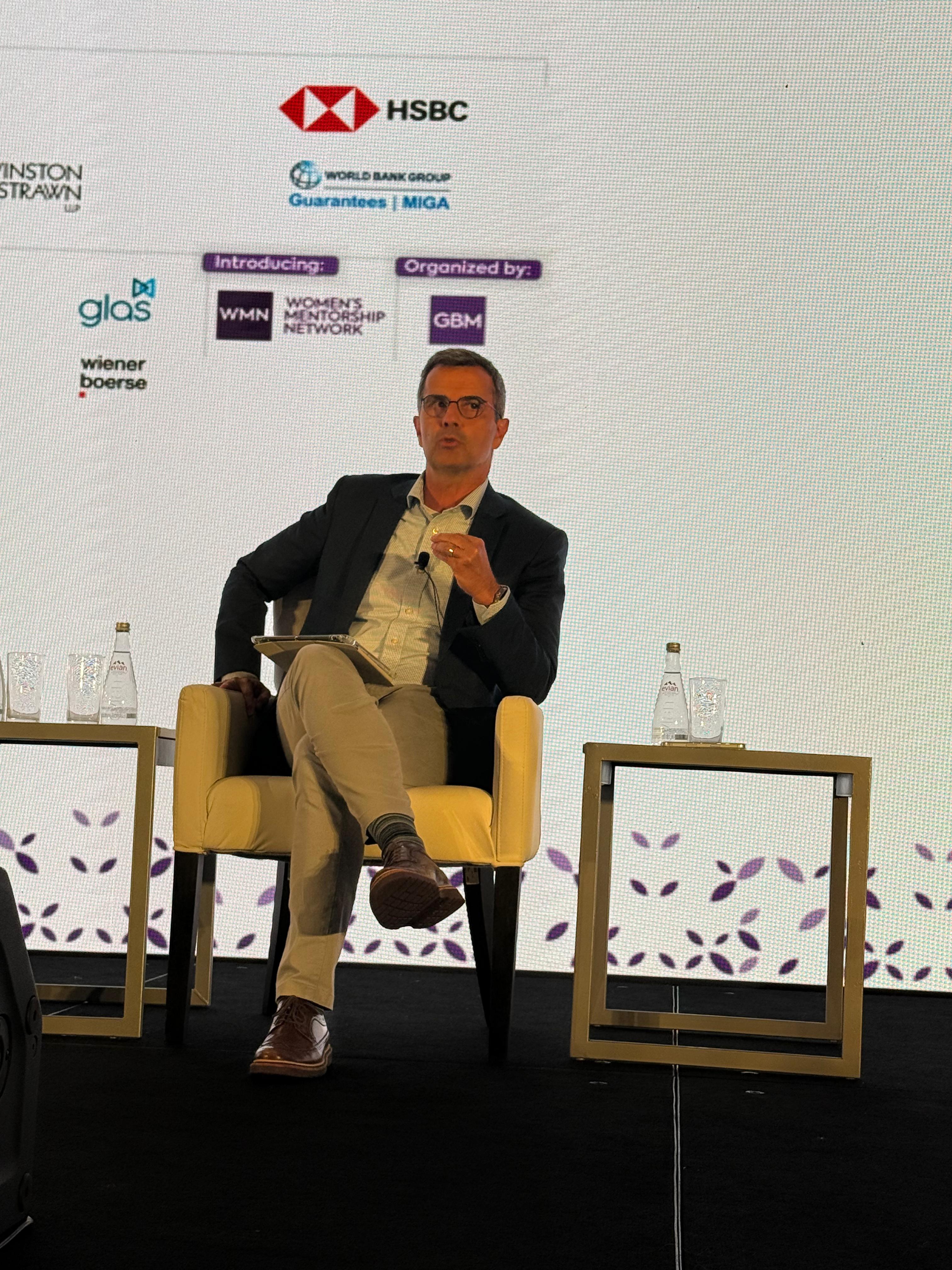
Carlos André, chairman at Anbima
André said regional markets have an opportunity to learn faster from each other as they roll out new frameworks. “We have so many opportunities to be actually interacting and trying to find common initiatives, and we need to seize this momentum and translate it into concrete initiatives” he said, referring to Brazil and Mexico’s parallel efforts to widen local capital access.
The discussion ended with a practical emphasis echoed across speakers: reforms can widen the door, but investor-base growth, repeat issuance, clearer processes and implementation support — including education and incentives for intermediaries — will determine whether SMEs can walk through it.
Anbima calls for regional coordination to widen SME capital access
Published March 2, 2026
To share
At Global Banking & Markets Latin America 2026, the Association said regulatory reform is advancing, but execution and coordination are now key to expanding local capital access
Global Banking & Markets Latin America 2026
Regulatory reforms in Brazil and Mexico are reshaping the rules of the game for capital formation in Latin America and the Caribbean, but panelists at Global Banking & Markets Latin America 2026 said the next phase is about execution: making issuance faster and cheaper, broadening investor participation and creating enough scale for smaller companies to tap markets sustainably.
The debate took place Feb. 26 on the panel “From reforms to results: Uneven paths to local capital access in LAC’s evolving markets,” with Carlos André, chairman of Anbima (Brazilian Financial and Capital Markets Association); Natalia Dias, managing director of capital markets at IDB Invest; Sofía Calvo, corporate finance and banking relations director at Grupo Bimbo; and Luis Gonzalí, vice president and co-chief investment officer at Franklin Templeton Mexico.
Brazil and Mexico: reform momentum, different starting points
Anbima’s chairman said Brazil has gone through a multi-year modernization effort spanning investment funds, public offerings, and distribution transparency.
André noted that the reforms calibrated disclosure and procedural requirements to the size of each offering and its target audience, shortened time to market, introduced tougher transparency rules on remuneration and conflicts of interest in distribution, and modernized the investment fund industry, bringing it much closer to international standards.
“Together, these changes better position Brazil for future market growth, though improved macro conditions remain critical,” he said.
Mexico, meanwhile, is pursuing a simplified access track for mid-sized companies through revisions to its securities market law. Franklin Templeton’s Gonzalí said the goal is to bring more companies into the market by cutting cost and time barriers. “The idea is to make it simple for those companies,” he said, citing fee reductions and faster approval timelines.
He added that the new framework shifts part of the approval process away from the regulator. “You don’t need the regulator, you need only the approval of the stock exchange,” he said.
But he cautioned that implementation is the hard part. “In the spirit it’s a very beautiful law. However, there’s a lot of legislative work to do,” Gonzalí said, arguing that many smaller companies still lack governance and credit quality to meet investor expectations, while ticket sizes can be too small for large institutions.
IDB Invest: turning policy into investable flows
Dias framed IDB Invest’s role as translating better rules into real issuance and liquidity by connecting global pools of capital to local opportunities. “We actually translate these improvements into real investment opportunities for the market by bringing new investors to the market,” she said.
She highlighted Brazil’s Eco Invest as a case study of how a program can be structured to pull in international demand. The initiative, she said, has already mobilized substantial capital: Eco Invest “has raised more than $28 billion in investments,” Dias noted.
To tackle foreign-investor constraints — particularly mandates that limit currency or risk exposure — she pointed to efforts to repackage local assets into formats that meet global requirements.
“How can we actually repack local assets and then place these assets with large institutional investors?” she said, describing the approach behind IDB Invest’s Request Plus initiative, including risk-mitigation tools such as FX hedging.
Issuers’ view: liquidity is built through repetition and standardization
From the corporate issuer side, Calvo argued that market depth is built less by one-off reforms and more by repeated issuance, predictable processes and standardized documentation — especially during volatility. “Liquidity doesn’t come by just issuing once. We have to make sure that this becomes a consistent thing,” she said.
She added that frequent issuers can help “create this consistency” in the curve and pricing, and that better market plumbing matters as much as rule changes. “Cost efficiency is as important as regulation,” Calvo said, emphasizing coordination across regulators, banks, investors and other market participants to improve predictability and lower issuance costs.
The goal, she said, is to keep windows short and execution ready when markets open.
A shared takeaway: process efficiency and alignment
Despite different country realities, the panel converged on a common diagnosis: regulatory alignment and process efficiency are essential to unlock liquidity and attract global investors — particularly for SMEs, where scale, disclosure capacity and governance can be limiting factors.
Carlos André, chairman at Anbima
André said regional markets have an opportunity to learn faster from each other as they roll out new frameworks. “We have so many opportunities to be actually interacting and trying to find common initiatives, and we need to seize this momentum and translate it into concrete initiatives” he said, referring to Brazil and Mexico’s parallel efforts to widen local capital access.
The discussion ended with a practical emphasis echoed across speakers: reforms can widen the door, but investor-base growth, repeat issuance, clearer processes and implementation support — including education and incentives for intermediaries — will determine whether SMEs can walk through it.
Anbima calls for regional coordination to widen SME capital access
Published March 2, 2026
To share
At Global Banking & Markets Latin America 2026, the Association said regulatory reform is advancing, but execution and coordination are now key to expanding local capital access
Global Banking & Markets Latin America 2026
Regulatory reforms in Brazil and Mexico are reshaping the rules of the game for capital formation in Latin America and the Caribbean, but panelists at Global Banking & Markets Latin America 2026 said the next phase is about execution: making issuance faster and cheaper, broadening investor participation and creating enough scale for smaller companies to tap markets sustainably.
The debate took place Feb. 26 on the panel “From reforms to results: Uneven paths to local capital access in LAC’s evolving markets,” with Carlos André, chairman of Anbima (Brazilian Financial and Capital Markets Association); Natalia Dias, managing director of capital markets at IDB Invest; Sofía Calvo, corporate finance and banking relations director at Grupo Bimbo; and Luis Gonzalí, vice president and co-chief investment officer at Franklin Templeton Mexico.
Brazil and Mexico: reform momentum, different starting points
Anbima’s chairman said Brazil has gone through a multi-year modernization effort spanning investment funds, public offerings, and distribution transparency.
André noted that the reforms calibrated disclosure and procedural requirements to the size of each offering and its target audience, shortened time to market, introduced tougher transparency rules on remuneration and conflicts of interest in distribution, and modernized the investment fund industry, bringing it much closer to international standards.
“Together, these changes better position Brazil for future market growth, though improved macro conditions remain critical,” he said.
Mexico, meanwhile, is pursuing a simplified access track for mid-sized companies through revisions to its securities market law. Franklin Templeton’s Gonzalí said the goal is to bring more companies into the market by cutting cost and time barriers. “The idea is to make it simple for those companies,” he said, citing fee reductions and faster approval timelines.
He added that the new framework shifts part of the approval process away from the regulator. “You don’t need the regulator, you need only the approval of the stock exchange,” he said.
But he cautioned that implementation is the hard part. “In the spirit it’s a very beautiful law. However, there’s a lot of legislative work to do,” Gonzalí said, arguing that many smaller companies still lack governance and credit quality to meet investor expectations, while ticket sizes can be too small for large institutions.
IDB Invest: turning policy into investable flows
Dias framed IDB Invest’s role as translating better rules into real issuance and liquidity by connecting global pools of capital to local opportunities. “We actually translate these improvements into real investment opportunities for the market by bringing new investors to the market,” she said.
She highlighted Brazil’s Eco Invest as a case study of how a program can be structured to pull in international demand. The initiative, she said, has already mobilized substantial capital: Eco Invest “has raised more than $28 billion in investments,” Dias noted.
To tackle foreign-investor constraints — particularly mandates that limit currency or risk exposure — she pointed to efforts to repackage local assets into formats that meet global requirements.
“How can we actually repack local assets and then place these assets with large institutional investors?” she said, describing the approach behind IDB Invest’s Request Plus initiative, including risk-mitigation tools such as FX hedging.
Issuers’ view: liquidity is built through repetition and standardization
From the corporate issuer side, Calvo argued that market depth is built less by one-off reforms and more by repeated issuance, predictable processes and standardized documentation — especially during volatility. “Liquidity doesn’t come by just issuing once. We have to make sure that this becomes a consistent thing,” she said.
She added that frequent issuers can help “create this consistency” in the curve and pricing, and that better market plumbing matters as much as rule changes. “Cost efficiency is as important as regulation,” Calvo said, emphasizing coordination across regulators, banks, investors and other market participants to improve predictability and lower issuance costs.
The goal, she said, is to keep windows short and execution ready when markets open.
A shared takeaway: process efficiency and alignment
Despite different country realities, the panel converged on a common diagnosis: regulatory alignment and process efficiency are essential to unlock liquidity and attract global investors — particularly for SMEs, where scale, disclosure capacity and governance can be limiting factors.
Carlos André, chairman at Anbima
André said regional markets have an opportunity to learn faster from each other as they roll out new frameworks. “We have so many opportunities to be actually interacting and trying to find common initiatives, and we need to seize this momentum and translate it into concrete initiatives” he said, referring to Brazil and Mexico’s parallel efforts to widen local capital access.
The discussion ended with a practical emphasis echoed across speakers: reforms can widen the door, but investor-base growth, repeat issuance, clearer processes and implementation support — including education and incentives for intermediaries — will determine whether SMEs can walk through it.
Get exclusive updates by email
Receive news, tips, events, and much more directly to your inbox.
Get exclusive updates by email
Receive news, tips, events, and much more directly to your inbox.