
About us
Brazil at a Glance
Publications

Sustainability Week highlights progress in sustainable finance
Published June 9, 2026
To share
Anbima took part in the IDB Invest international forum in Barbados, where discussions addressed challenges and opportunities for the ESG agenda
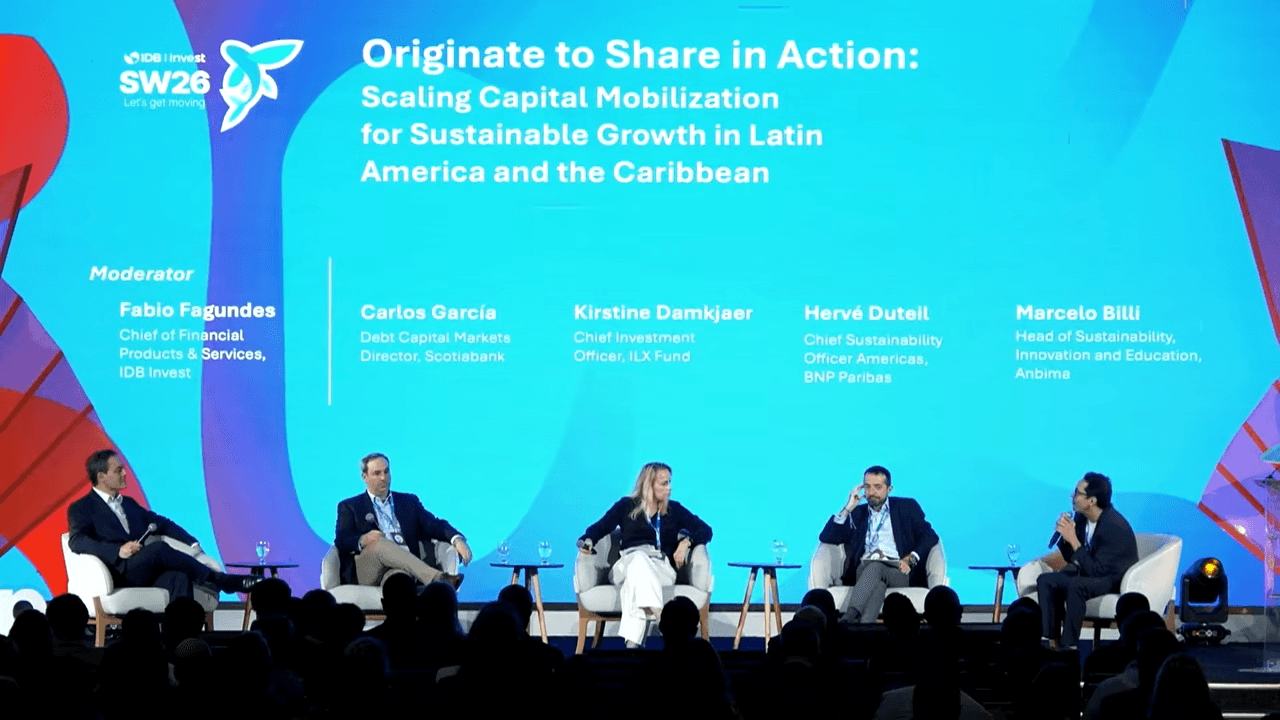
Sustainability Week, an international forum organized by IDB Invest in Barbados last month, gathered experts and market participants to discuss the progress of sustainable finance in Latin America and the Caribbean. The debates made clear that the ESG agenda has evolved and now calls for less intention and more execution.
“The discussions reinforced that we already have the main elements needed to advance sustainability initiatives, such as available capital, investor interest, and a structured agenda. The challenge now is to better organize this flow, bringing projects and investors together in a more efficient and predictable way,” said Marcelo Billi, Anbima’s head of Sustainability, Innovation, and Education.
Mobilizing capital at scale
The event also addressed a central issue on the global agenda: how to mobilize private capital at scale. The answer involves creating a more favorable environment, with well-structured public policies and a more efficient organization of capital flows.
Brazil was cited as a benchmark in Latin America because of its Ecological Transformation Plan. Initiatives such as Eco Invest Brasil, the Financing Mobilization Program for Sustainable Projects, and BIP, the Brazil Climate and Ecological Transformation Investment Platform, support this agenda, with a focus on attracting international investment.
Despite these advances, participants also pointed to challenges, such as the lack of standardization across metrics and taxonomies, which still makes it harder for investors to make decisions. In addition, many projects carry higher risks and longer time frames, requiring different institutions to work together over time.
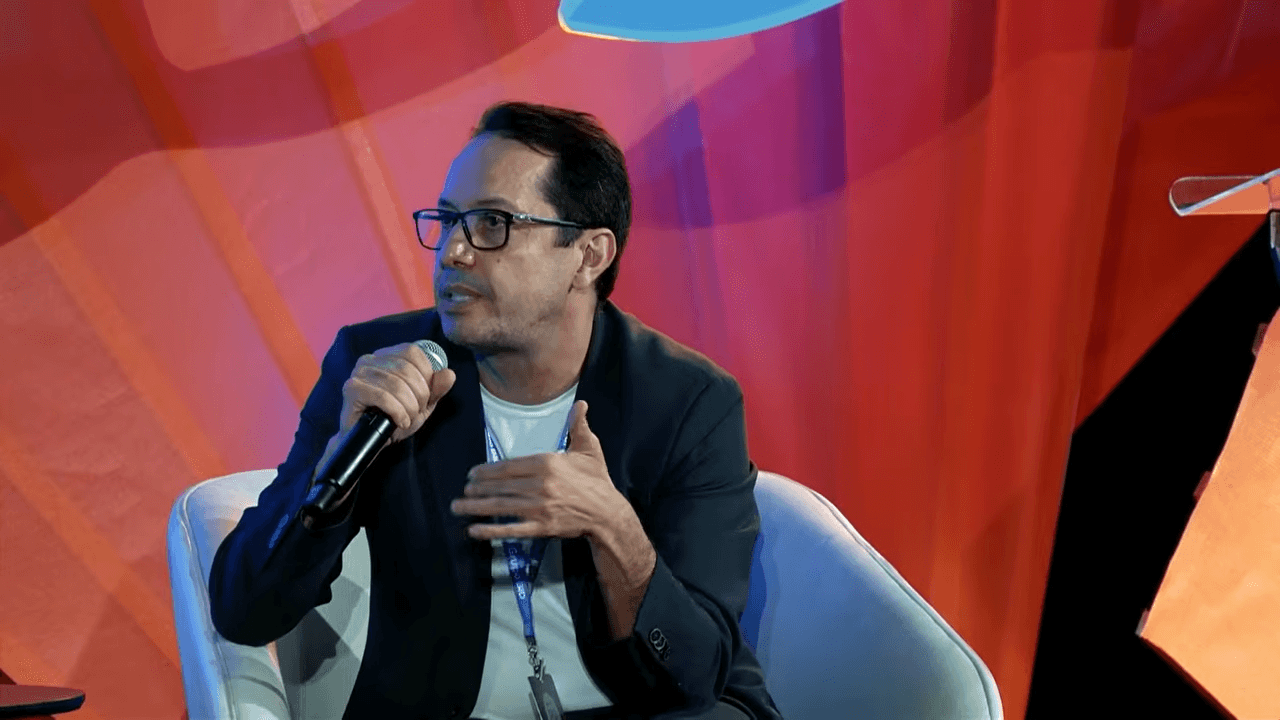
Marcelo Billi
For Billi, the agenda is no longer separate from the financial market and has become part of its logic. “To gain scale, it will be essential to reduce barriers in project structuring and create mechanisms that make it easier for investors to enter over time.”
Innovation and new opportunities
Digital transformation was also mentioned at the event as an important ally of sustainability. Technologies such as artificial intelligence and fintech solutions help increase transparency, improve impact traceability, and boost efficiency.
Financial instruments are also continuing to evolve. Thematic bonds, including green, social, blue, and sustainable bonds, continue to expand and have significant growth potential. Recent examples, such as blue bonds and biodiversity-related issuances, show how the market has been innovating.
The next step
The event’s main message was that sustainability and financial markets need to move forward together in an increasingly integrated way.
“The challenge is no longer to show that it is possible, but to ensure that it works consistently and at scale, turning intention into investment and real impact,” Billi said.
Coverage of international forums such as this one reflects Anbima’s commitment to disseminating knowledge and supporting market development in line with the ESG agenda.
Follow our next coverage at London Climate Week, from June 20 to 26.
Learn more about Anbima in Action 2026
Anbima in Action 2026 brings together the association’s main strategic initiatives for the year, anchored in three areas: market development, institutional development, and transformation.
Sustainability Week highlights progress in sustainable finance
Published June 9, 2026
To share
Anbima took part in the IDB Invest international forum in Barbados, where discussions addressed challenges and opportunities for the ESG agenda
Sustainability Week, an international forum organized by IDB Invest in Barbados last month, gathered experts and market participants to discuss the progress of sustainable finance in Latin America and the Caribbean. The debates made clear that the ESG agenda has evolved and now calls for less intention and more execution.
“The discussions reinforced that we already have the main elements needed to advance sustainability initiatives, such as available capital, investor interest, and a structured agenda. The challenge now is to better organize this flow, bringing projects and investors together in a more efficient and predictable way,” said Marcelo Billi, Anbima’s head of Sustainability, Innovation, and Education.
Mobilizing capital at scale
The event also addressed a central issue on the global agenda: how to mobilize private capital at scale. The answer involves creating a more favorable environment, with well-structured public policies and a more efficient organization of capital flows.
Brazil was cited as a benchmark in Latin America because of its Ecological Transformation Plan. Initiatives such as Eco Invest Brasil, the Financing Mobilization Program for Sustainable Projects, and BIP, the Brazil Climate and Ecological Transformation Investment Platform, support this agenda, with a focus on attracting international investment.
Despite these advances, participants also pointed to challenges, such as the lack of standardization across metrics and taxonomies, which still makes it harder for investors to make decisions. In addition, many projects carry higher risks and longer time frames, requiring different institutions to work together over time.
Marcelo Billi
For Billi, the agenda is no longer separate from the financial market and has become part of its logic. “To gain scale, it will be essential to reduce barriers in project structuring and create mechanisms that make it easier for investors to enter over time.”
Innovation and new opportunities
Digital transformation was also mentioned at the event as an important ally of sustainability. Technologies such as artificial intelligence and fintech solutions help increase transparency, improve impact traceability, and boost efficiency.
Financial instruments are also continuing to evolve. Thematic bonds, including green, social, blue, and sustainable bonds, continue to expand and have significant growth potential. Recent examples, such as blue bonds and biodiversity-related issuances, show how the market has been innovating.
The next step
The event’s main message was that sustainability and financial markets need to move forward together in an increasingly integrated way.
“The challenge is no longer to show that it is possible, but to ensure that it works consistently and at scale, turning intention into investment and real impact,” Billi said.
Coverage of international forums such as this one reflects Anbima’s commitment to disseminating knowledge and supporting market development in line with the ESG agenda.
Follow our next coverage at London Climate Week, from June 20 to 26.
Learn more about Anbima in Action 2026
Anbima in Action 2026 brings together the association’s main strategic initiatives for the year, anchored in three areas: market development, institutional development, and transformation.
Sustainability Week highlights progress in sustainable finance
Published June 9, 2026
To share
Anbima took part in the IDB Invest international forum in Barbados, where discussions addressed challenges and opportunities for the ESG agenda
Sustainability Week, an international forum organized by IDB Invest in Barbados last month, gathered experts and market participants to discuss the progress of sustainable finance in Latin America and the Caribbean. The debates made clear that the ESG agenda has evolved and now calls for less intention and more execution.
“The discussions reinforced that we already have the main elements needed to advance sustainability initiatives, such as available capital, investor interest, and a structured agenda. The challenge now is to better organize this flow, bringing projects and investors together in a more efficient and predictable way,” said Marcelo Billi, Anbima’s head of Sustainability, Innovation, and Education.
Mobilizing capital at scale
The event also addressed a central issue on the global agenda: how to mobilize private capital at scale. The answer involves creating a more favorable environment, with well-structured public policies and a more efficient organization of capital flows.
Brazil was cited as a benchmark in Latin America because of its Ecological Transformation Plan. Initiatives such as Eco Invest Brasil, the Financing Mobilization Program for Sustainable Projects, and BIP, the Brazil Climate and Ecological Transformation Investment Platform, support this agenda, with a focus on attracting international investment.
Despite these advances, participants also pointed to challenges, such as the lack of standardization across metrics and taxonomies, which still makes it harder for investors to make decisions. In addition, many projects carry higher risks and longer time frames, requiring different institutions to work together over time.
Marcelo Billi
For Billi, the agenda is no longer separate from the financial market and has become part of its logic. “To gain scale, it will be essential to reduce barriers in project structuring and create mechanisms that make it easier for investors to enter over time.”
Innovation and new opportunities
Digital transformation was also mentioned at the event as an important ally of sustainability. Technologies such as artificial intelligence and fintech solutions help increase transparency, improve impact traceability, and boost efficiency.
Financial instruments are also continuing to evolve. Thematic bonds, including green, social, blue, and sustainable bonds, continue to expand and have significant growth potential. Recent examples, such as blue bonds and biodiversity-related issuances, show how the market has been innovating.
The next step
The event’s main message was that sustainability and financial markets need to move forward together in an increasingly integrated way.
“The challenge is no longer to show that it is possible, but to ensure that it works consistently and at scale, turning intention into investment and real impact,” Billi said.
Coverage of international forums such as this one reflects Anbima’s commitment to disseminating knowledge and supporting market development in line with the ESG agenda.
Follow our next coverage at London Climate Week, from June 20 to 26.
Learn more about Anbima in Action 2026
Anbima in Action 2026 brings together the association’s main strategic initiatives for the year, anchored in three areas: market development, institutional development, and transformation.
Get exclusive updates by email
Receive news, tips, events, and much more directly to your inbox.
Get exclusive updates by email
Receive news, tips, events, and much more directly to your inbox.