
About us
Brazil at a Glance
Publications

Market modernization takes center stage at ISDA meeting
Published May 27, 2026
To share
Discussions in Boston focused on AI, tokenization, private credit, operational resilience and the next phase of global derivatives regulation
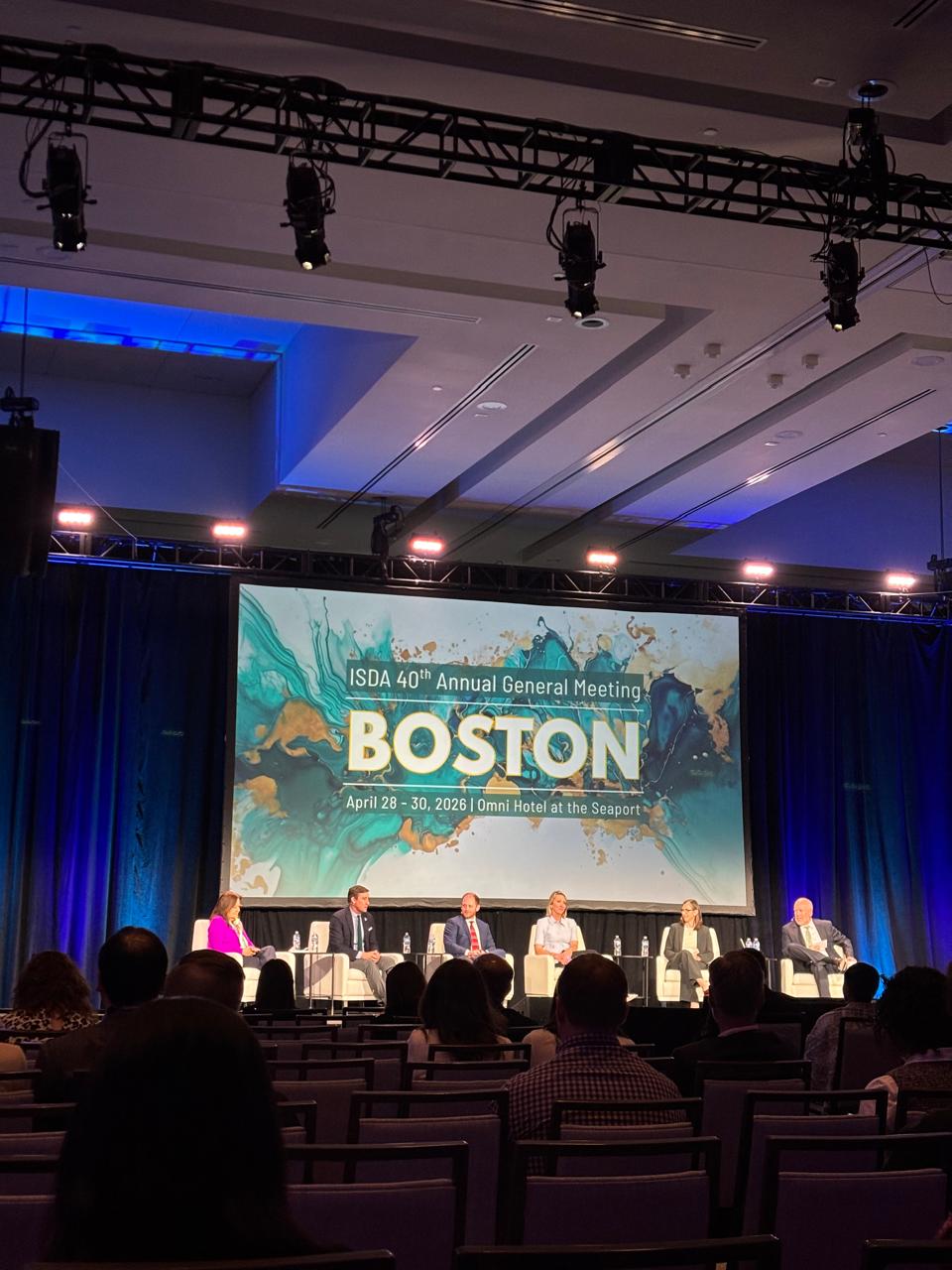
The transformation of global financial markets, driven by artificial intelligence, tokenization and evolving regulatory priorities, was at the center of discussions at the 40th Annual General Meeting of the International Swaps and Derivatives Association (ISDA), held last month in Boston, Massachusetts.
The annual meeting brought together market participants, regulators and infrastructure providers from around the world to debate the future of derivatives markets and the broader financial system. Anbima joined the discussions as part of its ongoing engagement with international forums focused on market development, regulatory alignment and innovation.
Held every year since 1985, ISDA’s Annual General Meeting rotates among Europe, the Americas and Asia. During this year’s edition, Singapore was announced as the host city for the 2027 meeting.
Digital assets and market infrastructure
One of the key themes was the growing role of digital assets and crypto-related products in financial markets. Discussions focused on the policy challenges involved in developing legal and regulatory frameworks for virtual assets, as well as their potential impact on traditional market structures.
Tokenization was also discussed as a tool that could bring greater efficiency to liquidity management and collateral workflows. Participants noted, however, that innovation must be accompanied by robust safeguards to ensure that new structures preserve market integrity, security and operational soundness.
Another important topic was the alignment between derivatives and securities financing transactions, especially repos. The debate emphasized the need for greater convergence to improve efficiency, reduce costs and limit market disruption during periods of stress. Participants also discussed next steps to strengthen the legal and regulatory environment for these transactions and increase market resilience, including changes related to U.S. central clearing of repos, expected on June 27.
AI, operational resilience and risk management
The meeting also explored the future of financial markets in the age of artificial intelligence. Discussions highlighted AI’s potential to transform financial institutions by increasing efficiency, improving client service and supporting decision-making processes.
At the same time, participants emphasized that the successful adoption of AI depends on high-quality data, cultural adaptation within institutions and the development of professionals prepared to work in an environment shaped by new technologies.
Operational resilience was another major theme. The discussions focused on how institutions must adapt to increasingly interconnected risks, including pandemics, wars, cyber incidents and economic instability. Participants also debated how AI could help identify vulnerabilities, while reinforcing the importance of standardized documentation and digitalization.
In derivatives markets, tools such as the ISDA Notices Hub were discussed as ways to bring greater efficiency to notification processes and the termination of contractual relationships.
Derivatives in emerging markets
The development of derivatives markets in emerging economies was also on the agenda. Participants discussed challenges such as the absence of credible benchmarks, complex regulatory environments and the need to build local market infrastructure.
The discussions pointed to the importance of collaboration among market participants, regulators and infrastructure providers to support the local implementation of international standards, regulatory development, effective collateral management and the role of clearing houses.
The main objective, participants noted, is to build functional derivatives markets that support economic growth and risk management while addressing local challenges and ensuring regulatory compliance.
Regulatory priorities and governance
The meeting also addressed regulators’ growing focus on private credit, equity markets and non-bank financial institutions, as well as the expected evolution of bank capital rules after the publication of the final Basel III standards in the United States.
Another area of discussion was the evolution of Determinations Committees. Participants reviewed proposed changes to committee rules, including the use of more detailed statements explaining committee decisions, with the goal of increasing transparency, improving agility and reducing operational risks.
The role of committee governance in these changes was also emphasized, along with the challenges involved in exchanging confidential information during credit events.
Market modernization takes center stage at ISDA meeting
Published May 27, 2026
To share
Discussions in Boston focused on AI, tokenization, private credit, operational resilience and the next phase of global derivatives regulation
The transformation of global financial markets, driven by artificial intelligence, tokenization and evolving regulatory priorities, was at the center of discussions at the 40th Annual General Meeting of the International Swaps and Derivatives Association (ISDA), held last month in Boston, Massachusetts.
The annual meeting brought together market participants, regulators and infrastructure providers from around the world to debate the future of derivatives markets and the broader financial system. Anbima joined the discussions as part of its ongoing engagement with international forums focused on market development, regulatory alignment and innovation.
Held every year since 1985, ISDA’s Annual General Meeting rotates among Europe, the Americas and Asia. During this year’s edition, Singapore was announced as the host city for the 2027 meeting.
Digital assets and market infrastructure
One of the key themes was the growing role of digital assets and crypto-related products in financial markets. Discussions focused on the policy challenges involved in developing legal and regulatory frameworks for virtual assets, as well as their potential impact on traditional market structures.
Tokenization was also discussed as a tool that could bring greater efficiency to liquidity management and collateral workflows. Participants noted, however, that innovation must be accompanied by robust safeguards to ensure that new structures preserve market integrity, security and operational soundness.
Another important topic was the alignment between derivatives and securities financing transactions, especially repos. The debate emphasized the need for greater convergence to improve efficiency, reduce costs and limit market disruption during periods of stress. Participants also discussed next steps to strengthen the legal and regulatory environment for these transactions and increase market resilience, including changes related to U.S. central clearing of repos, expected on June 27.
AI, operational resilience and risk management
The meeting also explored the future of financial markets in the age of artificial intelligence. Discussions highlighted AI’s potential to transform financial institutions by increasing efficiency, improving client service and supporting decision-making processes.
At the same time, participants emphasized that the successful adoption of AI depends on high-quality data, cultural adaptation within institutions and the development of professionals prepared to work in an environment shaped by new technologies.
Operational resilience was another major theme. The discussions focused on how institutions must adapt to increasingly interconnected risks, including pandemics, wars, cyber incidents and economic instability. Participants also debated how AI could help identify vulnerabilities, while reinforcing the importance of standardized documentation and digitalization.
In derivatives markets, tools such as the ISDA Notices Hub were discussed as ways to bring greater efficiency to notification processes and the termination of contractual relationships.
Derivatives in emerging markets
The development of derivatives markets in emerging economies was also on the agenda. Participants discussed challenges such as the absence of credible benchmarks, complex regulatory environments and the need to build local market infrastructure.
The discussions pointed to the importance of collaboration among market participants, regulators and infrastructure providers to support the local implementation of international standards, regulatory development, effective collateral management and the role of clearing houses.
The main objective, participants noted, is to build functional derivatives markets that support economic growth and risk management while addressing local challenges and ensuring regulatory compliance.
Regulatory priorities and governance
The meeting also addressed regulators’ growing focus on private credit, equity markets and non-bank financial institutions, as well as the expected evolution of bank capital rules after the publication of the final Basel III standards in the United States.
Another area of discussion was the evolution of Determinations Committees. Participants reviewed proposed changes to committee rules, including the use of more detailed statements explaining committee decisions, with the goal of increasing transparency, improving agility and reducing operational risks.
The role of committee governance in these changes was also emphasized, along with the challenges involved in exchanging confidential information during credit events.
Market modernization takes center stage at ISDA meeting
Published May 27, 2026
To share
Discussions in Boston focused on AI, tokenization, private credit, operational resilience and the next phase of global derivatives regulation
The transformation of global financial markets, driven by artificial intelligence, tokenization and evolving regulatory priorities, was at the center of discussions at the 40th Annual General Meeting of the International Swaps and Derivatives Association (ISDA), held last month in Boston, Massachusetts.
The annual meeting brought together market participants, regulators and infrastructure providers from around the world to debate the future of derivatives markets and the broader financial system. Anbima joined the discussions as part of its ongoing engagement with international forums focused on market development, regulatory alignment and innovation.
Held every year since 1985, ISDA’s Annual General Meeting rotates among Europe, the Americas and Asia. During this year’s edition, Singapore was announced as the host city for the 2027 meeting.
Digital assets and market infrastructure
One of the key themes was the growing role of digital assets and crypto-related products in financial markets. Discussions focused on the policy challenges involved in developing legal and regulatory frameworks for virtual assets, as well as their potential impact on traditional market structures.
Tokenization was also discussed as a tool that could bring greater efficiency to liquidity management and collateral workflows. Participants noted, however, that innovation must be accompanied by robust safeguards to ensure that new structures preserve market integrity, security and operational soundness.
Another important topic was the alignment between derivatives and securities financing transactions, especially repos. The debate emphasized the need for greater convergence to improve efficiency, reduce costs and limit market disruption during periods of stress. Participants also discussed next steps to strengthen the legal and regulatory environment for these transactions and increase market resilience, including changes related to U.S. central clearing of repos, expected on June 27.
AI, operational resilience and risk management
The meeting also explored the future of financial markets in the age of artificial intelligence. Discussions highlighted AI’s potential to transform financial institutions by increasing efficiency, improving client service and supporting decision-making processes.
At the same time, participants emphasized that the successful adoption of AI depends on high-quality data, cultural adaptation within institutions and the development of professionals prepared to work in an environment shaped by new technologies.
Operational resilience was another major theme. The discussions focused on how institutions must adapt to increasingly interconnected risks, including pandemics, wars, cyber incidents and economic instability. Participants also debated how AI could help identify vulnerabilities, while reinforcing the importance of standardized documentation and digitalization.
In derivatives markets, tools such as the ISDA Notices Hub were discussed as ways to bring greater efficiency to notification processes and the termination of contractual relationships.
Derivatives in emerging markets
The development of derivatives markets in emerging economies was also on the agenda. Participants discussed challenges such as the absence of credible benchmarks, complex regulatory environments and the need to build local market infrastructure.
The discussions pointed to the importance of collaboration among market participants, regulators and infrastructure providers to support the local implementation of international standards, regulatory development, effective collateral management and the role of clearing houses.
The main objective, participants noted, is to build functional derivatives markets that support economic growth and risk management while addressing local challenges and ensuring regulatory compliance.
Regulatory priorities and governance
The meeting also addressed regulators’ growing focus on private credit, equity markets and non-bank financial institutions, as well as the expected evolution of bank capital rules after the publication of the final Basel III standards in the United States.
Another area of discussion was the evolution of Determinations Committees. Participants reviewed proposed changes to committee rules, including the use of more detailed statements explaining committee decisions, with the goal of increasing transparency, improving agility and reducing operational risks.
The role of committee governance in these changes was also emphasized, along with the challenges involved in exchanging confidential information during credit events.
Get exclusive updates by email
Receive news, tips, events, and much more directly to your inbox.
Get exclusive updates by email
Receive news, tips, events, and much more directly to your inbox.