
About us
Brazil at a Glance
Publications

Anbima renews IIFA board mandate at Toronto conference
Published October 9, 2026
To share
Association secures another term on IIFA’s board while its representatives join global discussions on AI, investor advice and long-term savings
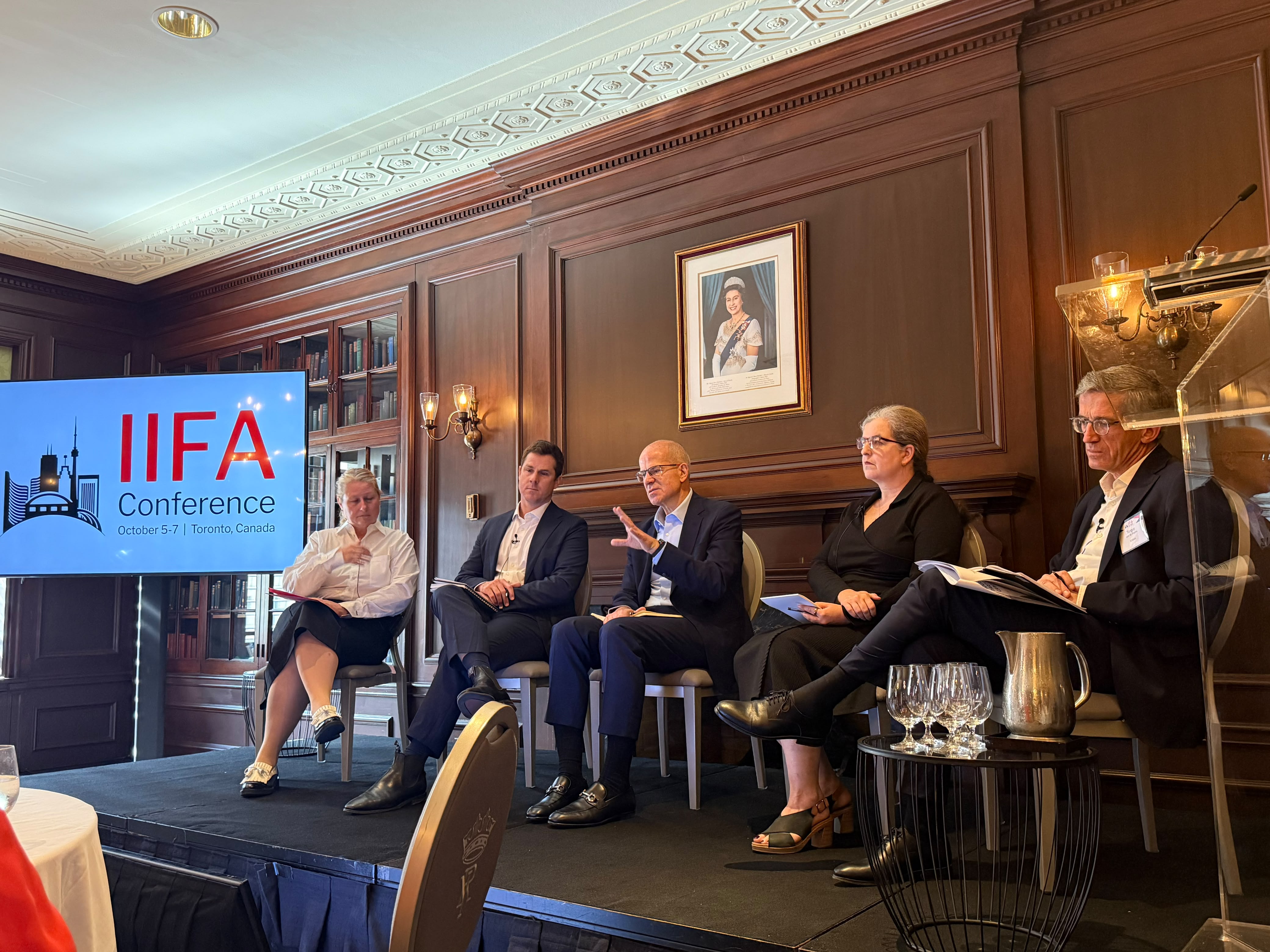
José Carlos Doherty (third from left)
Anbima (Brazilian Financial and Capital Markets Association) has secured another term on the board of directors of IIFA (International Investment Funds Association), reinforcing its role in global discussions on the development of the investment fund industry.
The board renewal came as fund associations, regulators and financial market representatives from around the world gathered in Toronto for the 2026 IIFA Annual Conference, held from October 5 to 7. The Association is represented on the board by CEO José Carlos Doherty.
Anbima also contributed directly to the conference program. Doherty took part in a debate on how to channel more household savings into long-term investments, while Ana Flávia Lopes, head of International Affairs, joined a panel to discuss how technology is transforming investment advice.
The broader conference agenda addressed some of the main forces reshaping asset management globally, including artificial intelligence, investor protection, financial literacy, innovation in investment products, blockchain and tokenization, digital assets, regulatory cooperation and competition for capital.
Bringing savings into long-term investment
Doherty joined the panel “Mobilizing Retail Savings into Investments,” which focused on ways to channel a greater share of household wealth into productive long-term investments.
The discussion explored how public policy, product design and distribution models can encourage investing while preserving suitability, transparency and trust.
Read more: X-ray of the Brazilian investor
“Brazil has an enormous opportunity to bring more people into the investment market. We have a population of around 160 million adults, but only 60 million invest in financial products. The other 100 million still rely mainly on cash or traditional savings accounts. The challenge is to offer solutions that make sense for them and encourage them to take that next step,” Doherty said.
“And we need to speak the language of investors. Many Brazilians think in the short term, so talking only about retirement may not be effective. Helping someone invest toward buying a car in a few years, for example, can be a much more compelling starting point,” he added.
The panel also examined the role investment funds and other market instruments can play in helping households build long-term wealth while directing more savings toward economic activity.
AI reshapes investment journey
Lopes took part in the panel “The Changing Face of Advice,” which examined how digital and hybrid models are changing the way investors obtain information and make financial decisions.
The discussion highlighted the growing role of artificial intelligence as a source of investment information and the implications for advisers, regulators and investor protection.
In Brazil, 9% of investors already use AI assistants to obtain investment information, while digital channels have become increasingly important throughout the investment journey. At the same time, the expansion of online sources raises questions about the reliability of information and the ability of investors to distinguish regulated advice from other forms of financial content.
“AI is changing where the investment conversation starts. Investors increasingly arrive after searching online, using social media or consulting AI tools, so the challenge is to make sure technology expands access without weakening trust,” Lopes said. “Financial education becomes even more important in this environment, both for investors and for the professionals who interact with them.”
The discussion showed that this shift extends well beyond Brazil. Representatives from France and Singapore highlighted the growing use of AI before investors seek information from traditional advisers, reinforcing the need to strengthen financial education as technology becomes embedded in financial decision-making.
Participants also discussed the risk of investors placing excessive confidence in information generated by AI or found on social media, without assessing its source or reliability.
Fraud and trusted channels
Fraud was another major focus of the debate. In Brazil, phishing and fake links remain a particular concern, as digital channels can make fraudulent offers appear increasingly credible.
Anbima has incorporated this issue into its investor-protection initiatives, including internal phishing tests. The Association has also previously worked with the Securities and Exchange Commission of Brazil (CVM) on an educational initiative involving a simulated fraudulent brokerage website, designed to help investors recognize the warning signs of online scams.
“Technology is here to stay, so the answer cannot simply be to tell investors not to use digital tools,” Lopes said. “We need to help them identify reliable sources, question what they see and understand the risks. Phishing is a major concern because fraudulent links and identities can look very convincing.”
The German representative on the panel also pointed to fake links and fake identities among the fraud patterns seen in that market.
Across jurisdictions, the discussion underscored a common challenge: as technology makes investment information easier to access, financial education and clear standards for trusted market participants become increasingly important.
A global agenda for asset management
The Toronto conference reflected the breadth of issues confronting the global fund industry.
Sessions examined the economic and geopolitical forces affecting international markets and competition for global capital, as well as the rapid evolution of investment products and distribution models.
Innovation was another central theme. Discussions covered the expansion of private markets and ETFs, new investment structures and the implications of blockchain for financial market infrastructure. Separate sessions addressed the rise of stablecoins, tokenized real-world assets and the regulatory changes accompanying digital-asset adoption.
The program also addressed international regulatory cooperation, investor protection and financial literacy, as well as broader trends reshaping asset management, including rising client expectations, fee pressure and the shift toward more integrated and personalized investment solutions.
Anbima’s continued presence on IIFA’s board and its participation in the conference are part of the Association’s international strategy of contributing Brazil’s experience to global debates while bringing international perspectives into discussions on the development of the country’s financial and capital markets.
Anbima renews IIFA board mandate at Toronto conference
Published October 9, 2026
To share
Association secures another term on IIFA’s board while its representatives join global discussions on AI, investor advice and long-term savings
José Carlos Doherty (third from left)
Anbima (Brazilian Financial and Capital Markets Association) has secured another term on the board of directors of IIFA (International Investment Funds Association), reinforcing its role in global discussions on the development of the investment fund industry.
The board renewal came as fund associations, regulators and financial market representatives from around the world gathered in Toronto for the 2026 IIFA Annual Conference, held from October 5 to 7. The Association is represented on the board by CEO José Carlos Doherty.
Anbima also contributed directly to the conference program. Doherty took part in a debate on how to channel more household savings into long-term investments, while Ana Flávia Lopes, head of International Affairs, joined a panel to discuss how technology is transforming investment advice.
The broader conference agenda addressed some of the main forces reshaping asset management globally, including artificial intelligence, investor protection, financial literacy, innovation in investment products, blockchain and tokenization, digital assets, regulatory cooperation and competition for capital.
Bringing savings into long-term investment
Doherty joined the panel “Mobilizing Retail Savings into Investments,” which focused on ways to channel a greater share of household wealth into productive long-term investments.
The discussion explored how public policy, product design and distribution models can encourage investing while preserving suitability, transparency and trust.
Read more: X-ray of the Brazilian investor
“Brazil has an enormous opportunity to bring more people into the investment market. We have a population of around 160 million adults, but only 60 million invest in financial products. The other 100 million still rely mainly on cash or traditional savings accounts. The challenge is to offer solutions that make sense for them and encourage them to take that next step,” Doherty said.
“And we need to speak the language of investors. Many Brazilians think in the short term, so talking only about retirement may not be effective. Helping someone invest toward buying a car in a few years, for example, can be a much more compelling starting point,” he added.
The panel also examined the role investment funds and other market instruments can play in helping households build long-term wealth while directing more savings toward economic activity.
AI reshapes investment journey
Lopes took part in the panel “The Changing Face of Advice,” which examined how digital and hybrid models are changing the way investors obtain information and make financial decisions.
The discussion highlighted the growing role of artificial intelligence as a source of investment information and the implications for advisers, regulators and investor protection.
In Brazil, 9% of investors already use AI assistants to obtain investment information, while digital channels have become increasingly important throughout the investment journey. At the same time, the expansion of online sources raises questions about the reliability of information and the ability of investors to distinguish regulated advice from other forms of financial content.
“AI is changing where the investment conversation starts. Investors increasingly arrive after searching online, using social media or consulting AI tools, so the challenge is to make sure technology expands access without weakening trust,” Lopes said. “Financial education becomes even more important in this environment, both for investors and for the professionals who interact with them.”
The discussion showed that this shift extends well beyond Brazil. Representatives from France and Singapore highlighted the growing use of AI before investors seek information from traditional advisers, reinforcing the need to strengthen financial education as technology becomes embedded in financial decision-making.
Participants also discussed the risk of investors placing excessive confidence in information generated by AI or found on social media, without assessing its source or reliability.
Fraud and trusted channels
Fraud was another major focus of the debate. In Brazil, phishing and fake links remain a particular concern, as digital channels can make fraudulent offers appear increasingly credible.
Anbima has incorporated this issue into its investor-protection initiatives, including internal phishing tests. The Association has also previously worked with the Securities and Exchange Commission of Brazil (CVM) on an educational initiative involving a simulated fraudulent brokerage website, designed to help investors recognize the warning signs of online scams.
“Technology is here to stay, so the answer cannot simply be to tell investors not to use digital tools,” Lopes said. “We need to help them identify reliable sources, question what they see and understand the risks. Phishing is a major concern because fraudulent links and identities can look very convincing.”
The German representative on the panel also pointed to fake links and fake identities among the fraud patterns seen in that market.
Across jurisdictions, the discussion underscored a common challenge: as technology makes investment information easier to access, financial education and clear standards for trusted market participants become increasingly important.
A global agenda for asset management
The Toronto conference reflected the breadth of issues confronting the global fund industry.
Sessions examined the economic and geopolitical forces affecting international markets and competition for global capital, as well as the rapid evolution of investment products and distribution models.
Innovation was another central theme. Discussions covered the expansion of private markets and ETFs, new investment structures and the implications of blockchain for financial market infrastructure. Separate sessions addressed the rise of stablecoins, tokenized real-world assets and the regulatory changes accompanying digital-asset adoption.
The program also addressed international regulatory cooperation, investor protection and financial literacy, as well as broader trends reshaping asset management, including rising client expectations, fee pressure and the shift toward more integrated and personalized investment solutions.
Anbima’s continued presence on IIFA’s board and its participation in the conference are part of the Association’s international strategy of contributing Brazil’s experience to global debates while bringing international perspectives into discussions on the development of the country’s financial and capital markets.
Anbima renews IIFA board mandate at Toronto conference
Published October 9, 2026
To share
Association secures another term on IIFA’s board while its representatives join global discussions on AI, investor advice and long-term savings
José Carlos Doherty (third from left)
Anbima (Brazilian Financial and Capital Markets Association) has secured another term on the board of directors of IIFA (International Investment Funds Association), reinforcing its role in global discussions on the development of the investment fund industry.
The board renewal came as fund associations, regulators and financial market representatives from around the world gathered in Toronto for the 2026 IIFA Annual Conference, held from October 5 to 7. The Association is represented on the board by CEO José Carlos Doherty.
Anbima also contributed directly to the conference program. Doherty took part in a debate on how to channel more household savings into long-term investments, while Ana Flávia Lopes, head of International Affairs, joined a panel to discuss how technology is transforming investment advice.
The broader conference agenda addressed some of the main forces reshaping asset management globally, including artificial intelligence, investor protection, financial literacy, innovation in investment products, blockchain and tokenization, digital assets, regulatory cooperation and competition for capital.
Bringing savings into long-term investment
Doherty joined the panel “Mobilizing Retail Savings into Investments,” which focused on ways to channel a greater share of household wealth into productive long-term investments.
The discussion explored how public policy, product design and distribution models can encourage investing while preserving suitability, transparency and trust.
Read more: X-ray of the Brazilian investor
“Brazil has an enormous opportunity to bring more people into the investment market. We have a population of around 160 million adults, but only 60 million invest in financial products. The other 100 million still rely mainly on cash or traditional savings accounts. The challenge is to offer solutions that make sense for them and encourage them to take that next step,” Doherty said.
“And we need to speak the language of investors. Many Brazilians think in the short term, so talking only about retirement may not be effective. Helping someone invest toward buying a car in a few years, for example, can be a much more compelling starting point,” he added.
The panel also examined the role investment funds and other market instruments can play in helping households build long-term wealth while directing more savings toward economic activity.
AI reshapes investment journey
Lopes took part in the panel “The Changing Face of Advice,” which examined how digital and hybrid models are changing the way investors obtain information and make financial decisions.
The discussion highlighted the growing role of artificial intelligence as a source of investment information and the implications for advisers, regulators and investor protection.
In Brazil, 9% of investors already use AI assistants to obtain investment information, while digital channels have become increasingly important throughout the investment journey. At the same time, the expansion of online sources raises questions about the reliability of information and the ability of investors to distinguish regulated advice from other forms of financial content.
“AI is changing where the investment conversation starts. Investors increasingly arrive after searching online, using social media or consulting AI tools, so the challenge is to make sure technology expands access without weakening trust,” Lopes said. “Financial education becomes even more important in this environment, both for investors and for the professionals who interact with them.”
The discussion showed that this shift extends well beyond Brazil. Representatives from France and Singapore highlighted the growing use of AI before investors seek information from traditional advisers, reinforcing the need to strengthen financial education as technology becomes embedded in financial decision-making.
Participants also discussed the risk of investors placing excessive confidence in information generated by AI or found on social media, without assessing its source or reliability.
Fraud and trusted channels
Fraud was another major focus of the debate. In Brazil, phishing and fake links remain a particular concern, as digital channels can make fraudulent offers appear increasingly credible.
Anbima has incorporated this issue into its investor-protection initiatives, including internal phishing tests. The Association has also previously worked with the Securities and Exchange Commission of Brazil (CVM) on an educational initiative involving a simulated fraudulent brokerage website, designed to help investors recognize the warning signs of online scams.
“Technology is here to stay, so the answer cannot simply be to tell investors not to use digital tools,” Lopes said. “We need to help them identify reliable sources, question what they see and understand the risks. Phishing is a major concern because fraudulent links and identities can look very convincing.”
The German representative on the panel also pointed to fake links and fake identities among the fraud patterns seen in that market.
Across jurisdictions, the discussion underscored a common challenge: as technology makes investment information easier to access, financial education and clear standards for trusted market participants become increasingly important.
A global agenda for asset management
The Toronto conference reflected the breadth of issues confronting the global fund industry.
Sessions examined the economic and geopolitical forces affecting international markets and competition for global capital, as well as the rapid evolution of investment products and distribution models.
Innovation was another central theme. Discussions covered the expansion of private markets and ETFs, new investment structures and the implications of blockchain for financial market infrastructure. Separate sessions addressed the rise of stablecoins, tokenized real-world assets and the regulatory changes accompanying digital-asset adoption.
The program also addressed international regulatory cooperation, investor protection and financial literacy, as well as broader trends reshaping asset management, including rising client expectations, fee pressure and the shift toward more integrated and personalized investment solutions.
Anbima’s continued presence on IIFA’s board and its participation in the conference are part of the Association’s international strategy of contributing Brazil’s experience to global debates while bringing international perspectives into discussions on the development of the country’s financial and capital markets.
Get exclusive updates by email
Receive news, tips, events, and much more directly to your inbox.
Get exclusive updates by email
Receive news, tips, events, and much more directly to your inbox.