
About us
Brazil at a Glance
Publications

Anbima shares Brazil’s agenda in Washington D.C.
Published May 13, 2026
To share
In the U.S. capital, the Association engaged with key international partners in discussions on global market developments
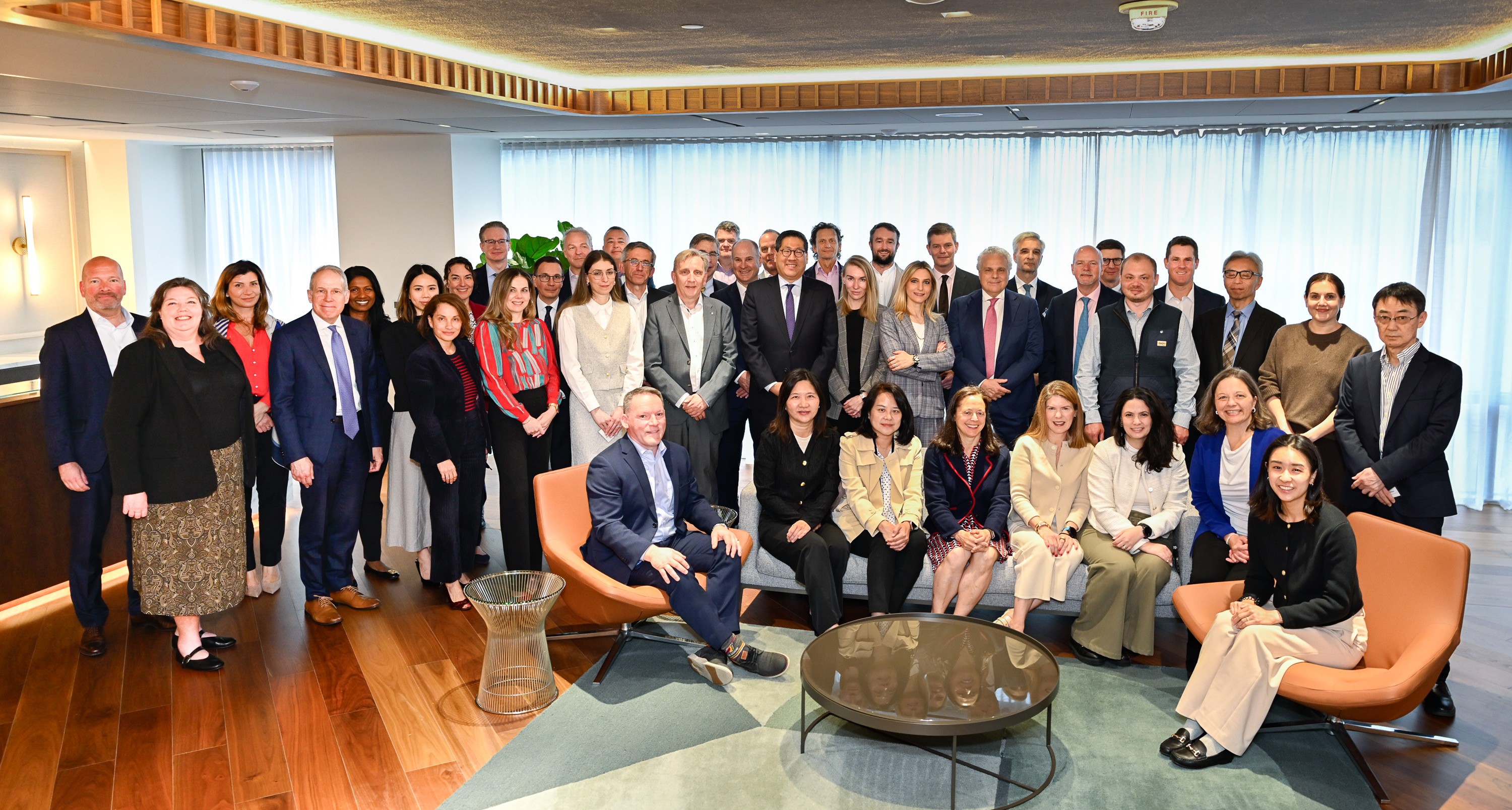
International Policy Roundtable participants in Washington, D.C.
Anbima recently took part in a series of international discussions in Washington, D.C., focused on the future of the investment fund industry, regulatory priorities, and the role of capital markets in supporting long-term financing.
The agenda included the IIFA Spring Meetings, organized by the International Investment Funds Association; the International Policy Roundtable, which brought together representatives from several jurisdictions to discuss policy priorities for asset management; and the ICI Leadership Summit, hosted by the Investment Company Institute.
Ana Flávia Lopes, head of International Affairs at Anbima, represented the association in the discussions, highlighting Brazil’s agenda on private credit, tokenization, digital assets, artificial intelligence, retirement savings and investor education.
“It’s interesting to see how discussions across different countries and regions are converging more and more,” Lopes said. “Themes such as private credit, tokenization, the responsible use of artificial intelligence and better communication with investors continue to gain relevance, all pointing to the importance of fostering markets that are innovative, transparent and looking into investor protection.”
Brazil’s private credit market
At the International Policy Roundtable, Anbima presented Brazil’s private credit market as a growing source of funding outside the traditional banking system. Capital markets now account for around 33% of financing for non-financial companies in Brazil, up from about 18% in 2020.
Lopes said the expansion reflects a structural change in the Brazilian financial system, with private credit becoming a permanent complement to bank lending rather than a temporary alternative during periods of tighter credit.
“Private credit has become a strategic component of Brazil’s financial system,” she said. “The market has grown significantly, but the focus now is on quality, transparency and risk governance. Brazil already has liquidity risk management rules aligned with IOSCO principles, and the next step is to keep strengthening investor protection, suitability and the clarity of information provided to investors.”
Tokenization, digital assets and AI
Digital assets and tokenization were also central topics in the meetings. Anbima highlighted its tokenization pilot, which will test blockchain applications in the issuance, trading and settlement of bonds and investment funds, simulating the full life cycle of a tokenized asset.
The initiative is part of Anbima’s broader innovation agenda, which also includes guidance for the financial industry on virtual asset custody and the responsible adoption of generative artificial intelligence. The association recently published operational guidelines for virtual asset custody service providers and, in March, launched a guide to support financial institutions in assessing risks when hiring generative AI providers.
During discussions on the U.S. Securities and Exchange Commission’s agenda, SEC Commissioner Mark Uyeda indicated that the regulator’s priorities are organized around making public markets more attractive, recognizing the growing relevance of private markets and providing more regulatory clarity for cryptoassets and innovation. He also noted the importance of moving away from an “enforcement first” approach and of distinguishing among different categories of digital assets.
For Anbima, the international debate showed that many jurisdictions are seeking a balance between innovation and clear safeguards.
“The discussion on tokenization is no longer only conceptual,” Lopes said. “Markets are now looking at operational questions such as custody, settlement, interoperability and governance. That is why industry associations have an important role to play in helping define standards and best practices.”
Investor behavior and communication
Anbima also shared findings from the ninth edition of the X-ray of the Brazilian Investor, the association’s annual survey conducted with polling and research firm Datafolha. The survey indicates that investors are increasingly using digital channels, including artificial intelligence and social media, as sources of information about investments.
In the discussions, Anbima linked these findings to a broader internal effort to review how the industry communicates with investors, including the language used in product documents and official materials.
The topic was also connected to Anbima’s national campaign, Muito além da Faria Lima — o mercado de capitais que move o Brasil (Far beyond Faria Lima: How capital markets drive Brazil), launched to broaden public understanding of how capital markets contribute to economic and social development, including infrastructure, agribusiness, innovation and job creation.
Policy momentum in asset management
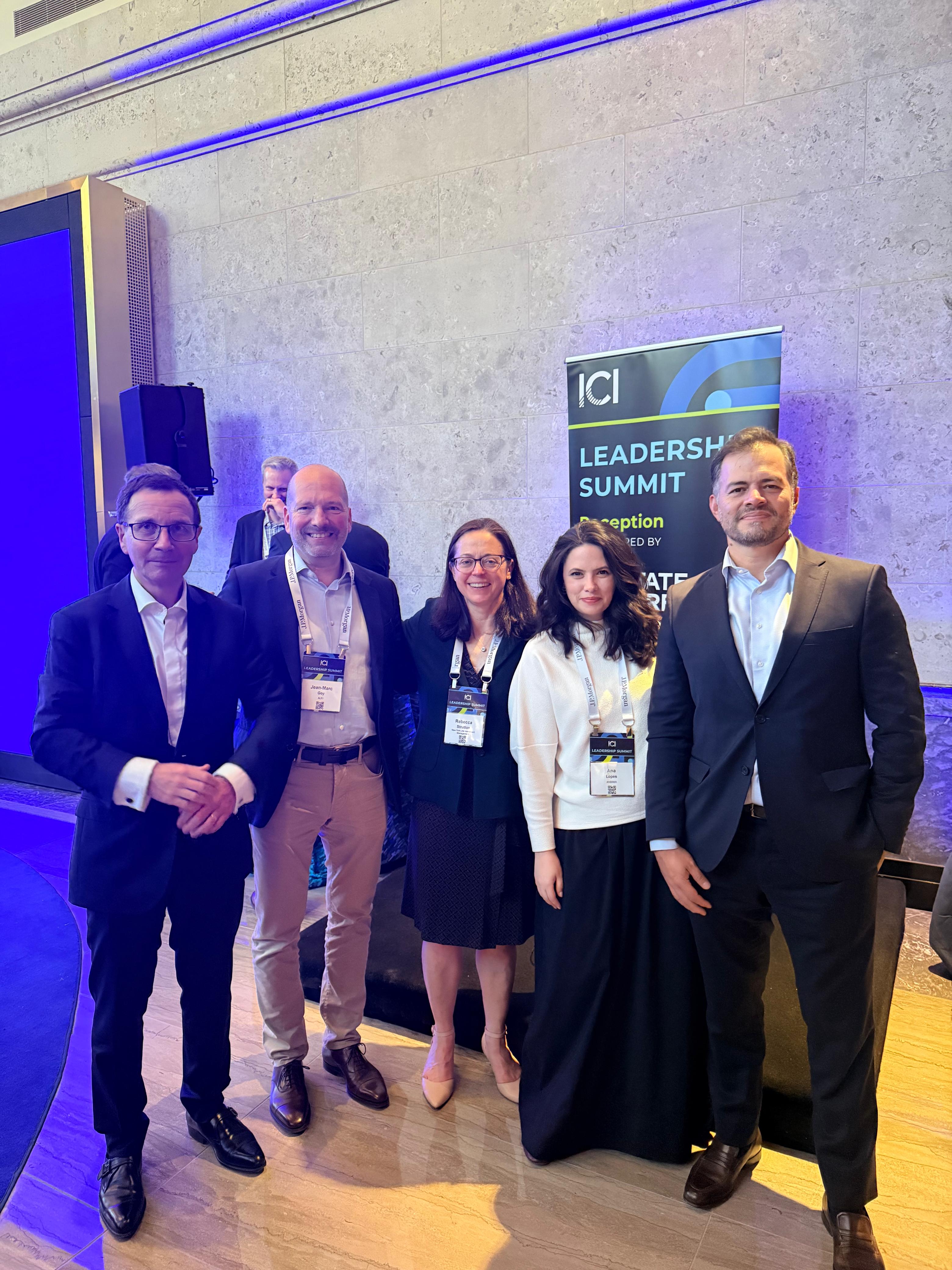
From left: Stéphane Janin (BNP Paribas Asset Management | Co-Chair at ICMA Asset Management and Investors Council); Jean-Marc Goy (Capital Group | ALFI Chairperson); Rebecca Strutton (VP | Associate General Counsel at New York Life Insurance Company); Ana Flávia Lopes (Head of International Affairs at Anbima); Eduardo Caballero (Norfolk Financial Group CEO | CASIP Board Member)
Anbima also attended the ICI Leadership Summit, which focused on policy developments shaping the asset management industry. The program included discussions on capital formation, retirement savings, access to private markets, ETF share classes, tax efficiency, innovation and the role of regulation in expanding long-term investing.
The event also featured discussions with policymakers and industry leaders on how regulatory frameworks can support competition, investor access and market development while preserving investor protection.
For Anbima, the meetings reinforced the importance of international coordination at a time when markets are dealing with similar challenges across jurisdictions, including the growth of private markets, the use of new technologies, the need for clearer investor communication and the expansion of long-term savings.
“International forums allow us to present Brazil’s progress, learn from other markets and identify areas where cooperation can help strengthen the industry,” Lopes said.
ANBIMA’s ongoing engagement with IIFA
Anbima is a member of IIFA’s Board of Directors and participates in several of the association’s working committees. Its engagement reflects the association’s strategy of contributing to international debates while bringing global references back to Brazil’s financial and capital markets.
At the IIFA Retirement Saving and Investing Working Committee, participants discussed global trends in retirement savings, the role of investment funds and the development of a paper bringing together perspectives from different jurisdictions, including Brazil.
In the International Regulatory Affairs Committee, discussions covered the SEC’s current agenda and how it relates to priorities in other markets. Topics included digital asset custody, tokenization of funds and the use of artificial intelligence in financial services.
Anbima shares Brazil’s agenda in Washington D.C.
Published May 13, 2026
To share
In the U.S. capital, the Association engaged with key international partners in discussions on global market developments
International Policy Roundtable participants in Washington, D.C.
Anbima recently took part in a series of international discussions in Washington, D.C., focused on the future of the investment fund industry, regulatory priorities, and the role of capital markets in supporting long-term financing.
The agenda included the IIFA Spring Meetings, organized by the International Investment Funds Association; the International Policy Roundtable, which brought together representatives from several jurisdictions to discuss policy priorities for asset management; and the ICI Leadership Summit, hosted by the Investment Company Institute.
Ana Flávia Lopes, head of International Affairs at Anbima, represented the association in the discussions, highlighting Brazil’s agenda on private credit, tokenization, digital assets, artificial intelligence, retirement savings and investor education.
“It’s interesting to see how discussions across different countries and regions are converging more and more,” Lopes said. “Themes such as private credit, tokenization, the responsible use of artificial intelligence and better communication with investors continue to gain relevance, all pointing to the importance of fostering markets that are innovative, transparent and looking into investor protection.”
Brazil’s private credit market
At the International Policy Roundtable, Anbima presented Brazil’s private credit market as a growing source of funding outside the traditional banking system. Capital markets now account for around 33% of financing for non-financial companies in Brazil, up from about 18% in 2020.
Lopes said the expansion reflects a structural change in the Brazilian financial system, with private credit becoming a permanent complement to bank lending rather than a temporary alternative during periods of tighter credit.
“Private credit has become a strategic component of Brazil’s financial system,” she said. “The market has grown significantly, but the focus now is on quality, transparency and risk governance. Brazil already has liquidity risk management rules aligned with IOSCO principles, and the next step is to keep strengthening investor protection, suitability and the clarity of information provided to investors.”
Tokenization, digital assets and AI
Digital assets and tokenization were also central topics in the meetings. Anbima highlighted its tokenization pilot, which will test blockchain applications in the issuance, trading and settlement of bonds and investment funds, simulating the full life cycle of a tokenized asset.
The initiative is part of Anbima’s broader innovation agenda, which also includes guidance for the financial industry on virtual asset custody and the responsible adoption of generative artificial intelligence. The association recently published operational guidelines for virtual asset custody service providers and, in March, launched a guide to support financial institutions in assessing risks when hiring generative AI providers.
During discussions on the U.S. Securities and Exchange Commission’s agenda, SEC Commissioner Mark Uyeda indicated that the regulator’s priorities are organized around making public markets more attractive, recognizing the growing relevance of private markets and providing more regulatory clarity for cryptoassets and innovation. He also noted the importance of moving away from an “enforcement first” approach and of distinguishing among different categories of digital assets.
For Anbima, the international debate showed that many jurisdictions are seeking a balance between innovation and clear safeguards.
“The discussion on tokenization is no longer only conceptual,” Lopes said. “Markets are now looking at operational questions such as custody, settlement, interoperability and governance. That is why industry associations have an important role to play in helping define standards and best practices.”
Investor behavior and communication
Anbima also shared findings from the ninth edition of the X-ray of the Brazilian Investor, the association’s annual survey conducted with polling and research firm Datafolha. The survey indicates that investors are increasingly using digital channels, including artificial intelligence and social media, as sources of information about investments.
In the discussions, Anbima linked these findings to a broader internal effort to review how the industry communicates with investors, including the language used in product documents and official materials.
The topic was also connected to Anbima’s national campaign, Muito além da Faria Lima — o mercado de capitais que move o Brasil (Far beyond Faria Lima: How capital markets drive Brazil), launched to broaden public understanding of how capital markets contribute to economic and social development, including infrastructure, agribusiness, innovation and job creation.
Policy momentum in asset management
From left: Stéphane Janin (BNP Paribas Asset Management | Co-Chair at ICMA Asset Management and Investors Council); Jean-Marc Goy (Capital Group | ALFI Chairperson); Rebecca Strutton (VP | Associate General Counsel at New York Life Insurance Company); Ana Flávia Lopes (Head of International Affairs at Anbima); Eduardo Caballero (Norfolk Financial Group CEO | CASIP Board Member)
Anbima also attended the ICI Leadership Summit, which focused on policy developments shaping the asset management industry. The program included discussions on capital formation, retirement savings, access to private markets, ETF share classes, tax efficiency, innovation and the role of regulation in expanding long-term investing.
The event also featured discussions with policymakers and industry leaders on how regulatory frameworks can support competition, investor access and market development while preserving investor protection.
For Anbima, the meetings reinforced the importance of international coordination at a time when markets are dealing with similar challenges across jurisdictions, including the growth of private markets, the use of new technologies, the need for clearer investor communication and the expansion of long-term savings.
“International forums allow us to present Brazil’s progress, learn from other markets and identify areas where cooperation can help strengthen the industry,” Lopes said.
ANBIMA’s ongoing engagement with IIFA
Anbima is a member of IIFA’s Board of Directors and participates in several of the association’s working committees. Its engagement reflects the association’s strategy of contributing to international debates while bringing global references back to Brazil’s financial and capital markets.
At the IIFA Retirement Saving and Investing Working Committee, participants discussed global trends in retirement savings, the role of investment funds and the development of a paper bringing together perspectives from different jurisdictions, including Brazil.
In the International Regulatory Affairs Committee, discussions covered the SEC’s current agenda and how it relates to priorities in other markets. Topics included digital asset custody, tokenization of funds and the use of artificial intelligence in financial services.
Anbima shares Brazil’s agenda in Washington D.C.
Published May 13, 2026
To share
In the U.S. capital, the Association engaged with key international partners in discussions on global market developments
International Policy Roundtable participants in Washington, D.C.
Anbima recently took part in a series of international discussions in Washington, D.C., focused on the future of the investment fund industry, regulatory priorities, and the role of capital markets in supporting long-term financing.
The agenda included the IIFA Spring Meetings, organized by the International Investment Funds Association; the International Policy Roundtable, which brought together representatives from several jurisdictions to discuss policy priorities for asset management; and the ICI Leadership Summit, hosted by the Investment Company Institute.
Ana Flávia Lopes, head of International Affairs at Anbima, represented the association in the discussions, highlighting Brazil’s agenda on private credit, tokenization, digital assets, artificial intelligence, retirement savings and investor education.
“It’s interesting to see how discussions across different countries and regions are converging more and more,” Lopes said. “Themes such as private credit, tokenization, the responsible use of artificial intelligence and better communication with investors continue to gain relevance, all pointing to the importance of fostering markets that are innovative, transparent and looking into investor protection.”
Brazil’s private credit market
At the International Policy Roundtable, Anbima presented Brazil’s private credit market as a growing source of funding outside the traditional banking system. Capital markets now account for around 33% of financing for non-financial companies in Brazil, up from about 18% in 2020.
Lopes said the expansion reflects a structural change in the Brazilian financial system, with private credit becoming a permanent complement to bank lending rather than a temporary alternative during periods of tighter credit.
“Private credit has become a strategic component of Brazil’s financial system,” she said. “The market has grown significantly, but the focus now is on quality, transparency and risk governance. Brazil already has liquidity risk management rules aligned with IOSCO principles, and the next step is to keep strengthening investor protection, suitability and the clarity of information provided to investors.”
Tokenization, digital assets and AI
Digital assets and tokenization were also central topics in the meetings. Anbima highlighted its tokenization pilot, which will test blockchain applications in the issuance, trading and settlement of bonds and investment funds, simulating the full life cycle of a tokenized asset.
The initiative is part of Anbima’s broader innovation agenda, which also includes guidance for the financial industry on virtual asset custody and the responsible adoption of generative artificial intelligence. The association recently published operational guidelines for virtual asset custody service providers and, in March, launched a guide to support financial institutions in assessing risks when hiring generative AI providers.
During discussions on the U.S. Securities and Exchange Commission’s agenda, SEC Commissioner Mark Uyeda indicated that the regulator’s priorities are organized around making public markets more attractive, recognizing the growing relevance of private markets and providing more regulatory clarity for cryptoassets and innovation. He also noted the importance of moving away from an “enforcement first” approach and of distinguishing among different categories of digital assets.
For Anbima, the international debate showed that many jurisdictions are seeking a balance between innovation and clear safeguards.
“The discussion on tokenization is no longer only conceptual,” Lopes said. “Markets are now looking at operational questions such as custody, settlement, interoperability and governance. That is why industry associations have an important role to play in helping define standards and best practices.”
Investor behavior and communication
Anbima also shared findings from the ninth edition of the X-ray of the Brazilian Investor, the association’s annual survey conducted with polling and research firm Datafolha. The survey indicates that investors are increasingly using digital channels, including artificial intelligence and social media, as sources of information about investments.
In the discussions, Anbima linked these findings to a broader internal effort to review how the industry communicates with investors, including the language used in product documents and official materials.
The topic was also connected to Anbima’s national campaign, Muito além da Faria Lima — o mercado de capitais que move o Brasil (Far beyond Faria Lima: How capital markets drive Brazil), launched to broaden public understanding of how capital markets contribute to economic and social development, including infrastructure, agribusiness, innovation and job creation.
Policy momentum in asset management
From left: Stéphane Janin (BNP Paribas Asset Management | Co-Chair at ICMA Asset Management and Investors Council); Jean-Marc Goy (Capital Group | ALFI Chairperson); Rebecca Strutton (VP | Associate General Counsel at New York Life Insurance Company); Ana Flávia Lopes (Head of International Affairs at Anbima); Eduardo Caballero (Norfolk Financial Group CEO | CASIP Board Member)
Anbima also attended the ICI Leadership Summit, which focused on policy developments shaping the asset management industry. The program included discussions on capital formation, retirement savings, access to private markets, ETF share classes, tax efficiency, innovation and the role of regulation in expanding long-term investing.
The event also featured discussions with policymakers and industry leaders on how regulatory frameworks can support competition, investor access and market development while preserving investor protection.
For Anbima, the meetings reinforced the importance of international coordination at a time when markets are dealing with similar challenges across jurisdictions, including the growth of private markets, the use of new technologies, the need for clearer investor communication and the expansion of long-term savings.
“International forums allow us to present Brazil’s progress, learn from other markets and identify areas where cooperation can help strengthen the industry,” Lopes said.
ANBIMA’s ongoing engagement with IIFA
Anbima is a member of IIFA’s Board of Directors and participates in several of the association’s working committees. Its engagement reflects the association’s strategy of contributing to international debates while bringing global references back to Brazil’s financial and capital markets.
At the IIFA Retirement Saving and Investing Working Committee, participants discussed global trends in retirement savings, the role of investment funds and the development of a paper bringing together perspectives from different jurisdictions, including Brazil.
In the International Regulatory Affairs Committee, discussions covered the SEC’s current agenda and how it relates to priorities in other markets. Topics included digital asset custody, tokenization of funds and the use of artificial intelligence in financial services.
Get exclusive updates by email
Receive news, tips, events, and much more directly to your inbox.
Get exclusive updates by email
Receive news, tips, events, and much more directly to your inbox.